
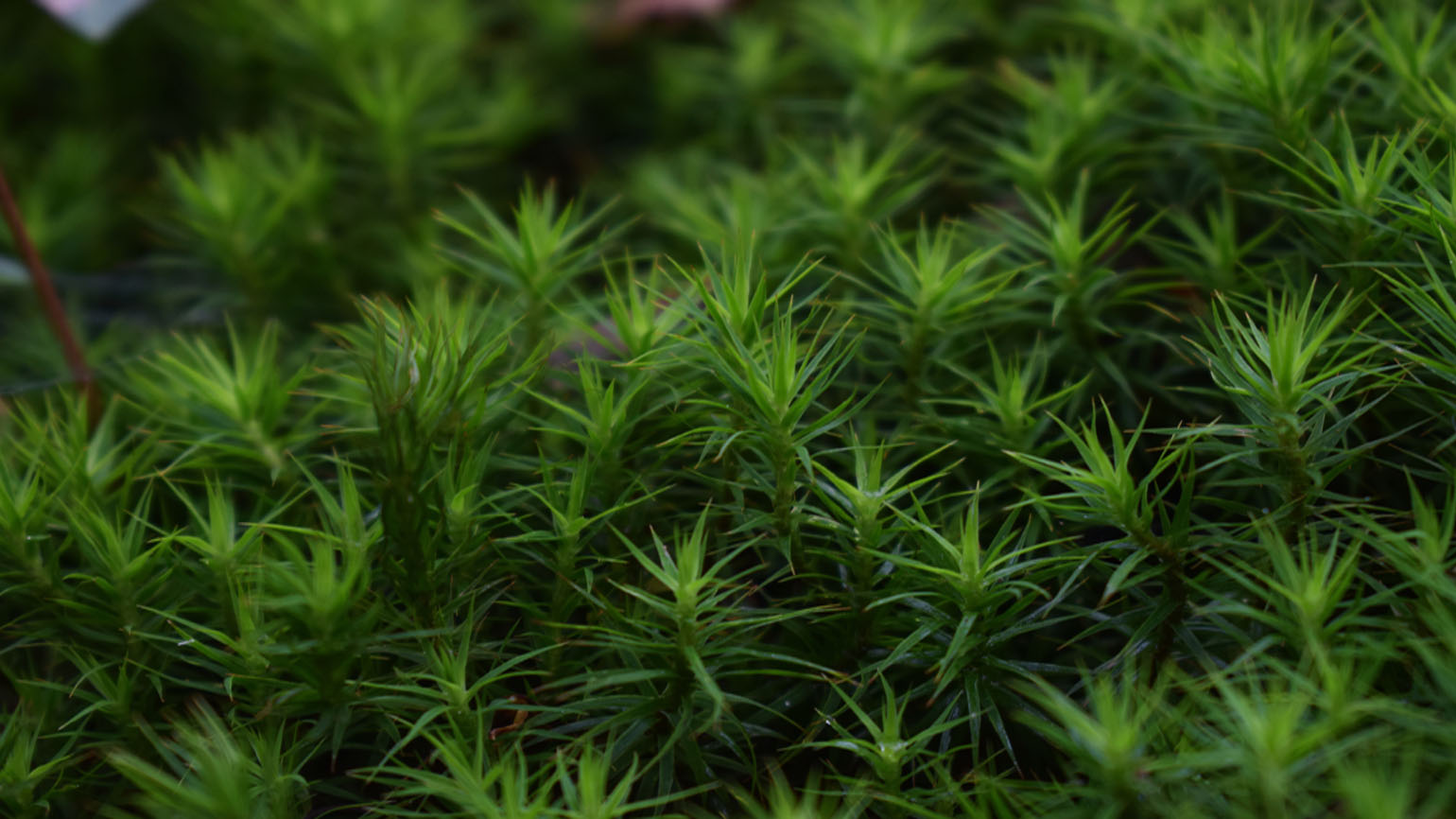
What are mosses
Mosses are non-flowering plants that produce spores and have stems and leaves, but no real roots. This allows them to survive in niches where other plants have a harder time, such as rocky soils and other substrates that do not allow root systems.

Mosses are ancient plants, going back 450 million years, and have survived and survived a series of drastic climate changes. Some 25,000 species of mosses exist and are found on every continent and in every ecosystem habitable by plants that use sunlight for energy.
Mosses, and their cousins liverworts and hornworts, are classified as Bryophyta (bryophytes) in the plant kingdom. Within the plant kingdom, bryophytes are the second most diverse group, surpassed only by angiosperms, the flowering plants
Moss in nature
Mosses are an important link in ecosystems: they produce oxygen, protect against erosion, create a favourable microclimate for germination of all kinds of seeds and fruits, and provide habitats for many small insects.
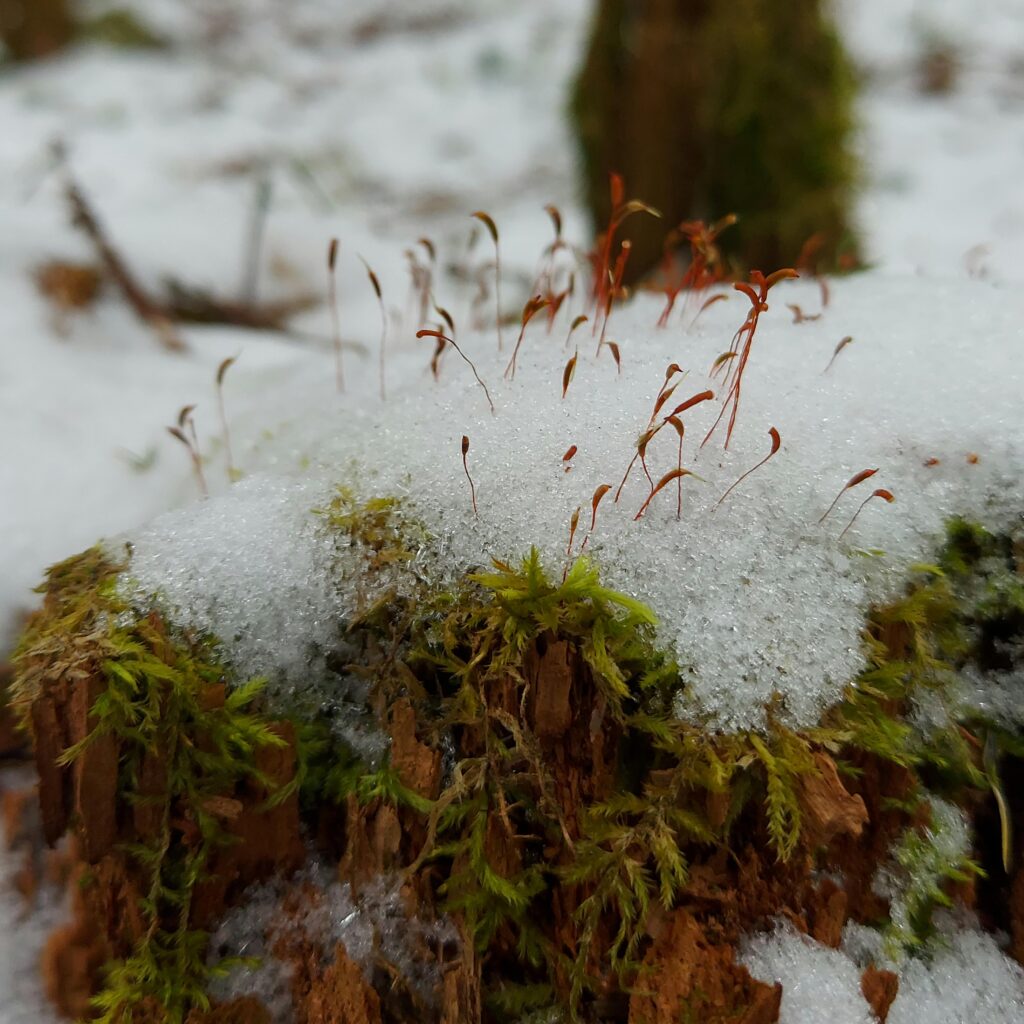
Mosses can influence the temperature of the soil by both warming and cooling it, depending on the environment. In warm places, they can protect tree roots by shading the soil and insulating it from high temperatures.
In the Arctic, they have the opposite effect on temperature. They can prevent heat from the sun reaching the ground and reduce the rate at which ice thaws, keeping it cool for longer.
Mosses also play a vital role in the development of new ecosystems. They are among the first plants to colonise disturbed areas, such as when an area is deforested or affected by forest fires. They stabilise the soil surface and retain water, allowing new plants to grow.
They help absorb rainfall, retain moisture in the soil beneath them and keep conditions around them moist. This allows other plants to thrive around them, such as in habitats like swamps and forests.
Moss communities provide microhabitats that are crucial for the survival of a diversity of organisms. They provide valuable shelters for insects to live, lay their eggs and hunt for food, or by themselves serving as food for herbivorous insects.
Mosses have no roots
Instead of roots, mosses have rhizoids, small hair-like structures. Their main function is to anchor the plant to rocks, bark or soil.
Although some mosses absorb their nutrients through the rhizoids, most get their moisture and nutrients from rain, water, and air through their absorbent surfaces by diffusion.
As a result, mosses are able to occupy areas that would otherwise be uninhabitable, such as rocky ledges on mountain slopes.
This also means that, unlike “normal” plants, mosses do not require any specific substrate or fertiliser in a vivarium, such as potting soil. However, most common mosses for a moss pot do thrive better in a slightly more acidic environment.
Resilient
Several species have adapted to survive in extreme conditions. Studies have shown that the lowest temperature at which they can photosynthesise (convert energy from sunlight into food) is around -15ºC and the highest around 40ºC.
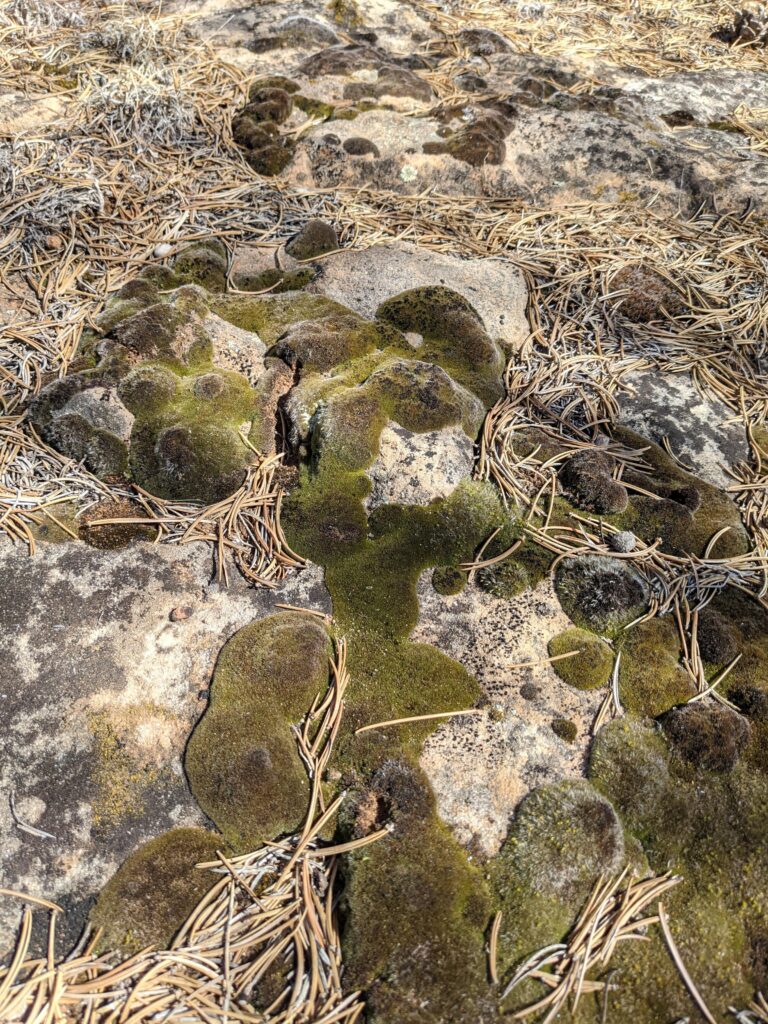
In hot and arid environments, such as prairies or deserts, mosses tolerate heat partly by going to sleep. When dehydrated, they can survive the heat much better than when hydrated.
Some mosses have even been known to survive high temperatures of 100ºC when dehydrated, and low temperatures of -272ºC. That’s one resilient little plant.
Conclusion
All these qualities make mosses extremely easy to maintain, even compared to the easiest houseplant, as long as humidity and other basic environmental requirements are met.
Given the right conditions, a moss pot will survive for months without any intervention, and with a little maintenance you can enjoy it for years.